Lutheran Faith and Worship
What Lutherans Believe
A plain introduction to Lutheran belief: grace alone, faith alone, scripture, baptism and holy communion in the Small Catechism.
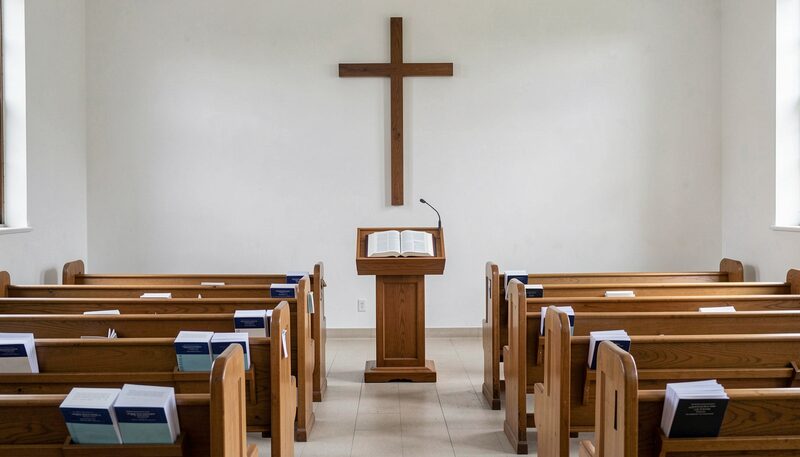
In a city like Macon, where church signs line Vineville Avenue and Sunday mornings move to the rhythm of Baptist, Methodist, Presbyterian and Lutheran congregations, the question of what a neighbor believes comes up over coffee more often than in a classroom. Lutheranism is the oldest branch of the Protestant family, five hundred years old in 2017, yet it remains one of the least explained traditions in the American South. This article sets out the belief of Lutheran churches in plain words, the way a visitor would hear it explained over a fellowship-hall table, with the vocabulary that makes the tradition distinctive.
Where does Lutheranism come from?
The tradition takes its name from Martin Luther, a German monk and university teacher whose public dispute over the sale of indulgences in 1517 grew into the Reformation. Luther never set out to found a church. He wanted to reform the Western church of his day, and the movement that carried his name organized itself only after reconciliation failed. The congregations that descended from that movement hold that their teaching is catholic in the old sense, that is, continuous with the ancient church, simply reformed according to the gospel. That self-understanding matters when reading Lutheran statements of belief: they read less like a new system and more like an argument about what the church always taught.
What does grace alone mean?
The first distinctive word is grace. Lutheran teaching holds that God saves human beings entirely as a gift, without any earned contribution from the person being saved. The phrase the tradition uses is grace alone, in Latin sola gratia. Nothing a person does, suffers or achieves adds to what God has already done in Christ. This conviction shapes the tone of Lutheran preaching, which spends more time announcing what God has done than issuing instructions about what hearers must now accomplish. A sermon in a Lutheran pulpit, at its best, leaves the listener relieved rather than graded.
Why do Lutherans say faith alone?
The second word is faith, again alone, sola fide. Faith in this vocabulary is not a heroic act of willpower that a person must manufacture. It is trust, the empty hand that receives a gift. Lutherans teach that even this trust is worked by God through the word of promise, in scripture and in preaching. Good works still matter, but their place changes: they are the fruit of faith and the shape of daily love for the neighbor, never the currency that purchases a standing before God. This ordering, promise first and works second, is the engine of the whole tradition, and it is the point Lutherans press when they talk about freedom.
How do Lutherans read the Bible?
The third alone is scripture, sola scriptura, which Lutherans understand as the claim that the Bible is the norm by which all teaching and life are judged. Two habits follow. First, preachers work through assigned readings each Sunday rather than through favorite passages, following the Revised Common Lectionary, a three-year cycle shared with many denominations, which the article on the order of a Lutheran service describes in detail. Second, readers distinguish law and gospel within the text: the law exposes what love requires and where human beings fall short, and the gospel announces the promise that gathers them back up. A Lutheran bible study sounds less like a debate about facts and more like a running argument between those two voices.
What happens in baptism?
Lutherans count two sacraments, baptism and holy communion, defined as acts commanded by Christ that join a visible element to the word of promise. In baptism, water and the word together mark a person as belonging to God, and Lutherans baptize infants as readily as adults on the logic that the gift comes first and the response grows afterward. A typical baptism in a Macon congregation includes the whole assembly renewing its own baptismal promises, which says something important about how the tradition thinks: the newly baptized is not enrolling in a course but being joined to a people. Parents and sponsors promise to bring the child to worship, to teach the prayers and the creed, and to place scripture in their hands, promises the congregation hears aloud.
What is holy communion for Lutherans?
Holy communion, also called the eucharist or the Lord's Supper, is bread and wine that Lutherans confess Christ truly gives with the words of promise, in, with and under the elements. Lutherans have argued for five centuries about how to phrase that presence, but the pastoral point is simpler: the meal is God's giving, not the congregation's remembering exercise. In congregations of the Evangelical Lutheran Church in America, the largest Lutheran body in the country, all baptized Christians are welcome at the table, a practice churches call an open table. The denomination's own summary of belief is published at elca.org for readers who want the wording from the source. Many congregations in Middle Georgia celebrate communion every Sunday, others twice a month, and the pattern is printed in each congregation's worship folder.
What are the catechism and the confessions?
New members and confirmation students usually meet the tradition through the Small Catechism, a brief handbook Luther wrote in 1529 for households: the Ten Commandments, the Creed, the Lord's Prayer, and explanations of baptism, confession and the supper. It is short enough to memorize and dry enough to be honest, which is why it survives. The Augsburg Confession of 1530, a longer statement presented to the emperor, and the Book of Concord of 1580, the collected confessions of the tradition, stand behind it. A reader who wants the full architecture of Lutheran teaching, as distinct from a card summarizing it, eventually meets these documents, and they reward the patience they demand.
How does belief shape the rest of the week?
Lutheran teaching has a quiet doctrine of daily life called vocation: God serves the neighbor through the parent, the nurse, the truck driver and the checkout clerk, so that ordinary work is a field of service and not a break from religion. That conviction sends congregations outward, into pantries and clothing closets, tutoring rooms and hospital corridors. The history of Lutheran presence in Macon, told in the history of Redeemer, shows the pattern in one congregation's pantry and youth ministry, and the articles on church food and clothing pantries and on volunteering in Macon trace what the habit looks like across a city. Belief, in this tradition, ends the week exactly where the week began: with a gift received and a neighbor fed.
Read next
Lutheran Faith and Worship
Lutheran Faith and Worship
What Lutherans believe, how a Sunday service runs, the hymns that carry the tradition, and how to read a Macon congregation's history.
Belief, the order of a service, the hymns, and a congregation's records.
Lutheran Faith and Worship
Inside a Lutheran Sunday Service
The shape of Lutheran worship from opening hymn to benediction: confession, word, sermon, creed, prayers and holy communion.
From the opening hymn to the benediction, step by step.

Congregation and Family Life
Children and Family Ministries
What church programs offer families: Sunday school, children's music, youth groups and seasons such as vacation Bible school.
Sunday school, children's music, youth groups and vacation Bible school.