Lutheran Faith and Worship
The History of Redeemer in Macon
How to read the history of Lutheran Church of the Redeemer on Pierce Avenue: synod records, newsletters, photo albums and the web archive.
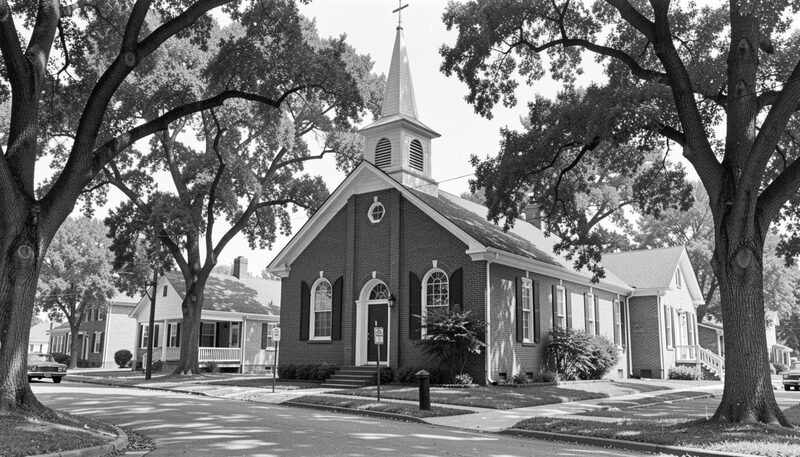
Every congregation keeps a past, and in Macon the past sits close to the surface: church buildings anchor whole blocks, and family names repeat across generations of membership rolls. Lutheran Church of the Redeemer, the congregation whose long-running website gave this domain its name, worships on Pierce Avenue in Macon and belongs to the Evangelical Lutheran Church in America. Its story, like most congregation stories, survives in fragments: a directory line here, a newsletter PDF there, a photo album with no caption. This article gathers what the public record actually shows, then explains how any reader can research a congregation's history the same way, because the method matters more than any single fact.
What the public record shows today
The congregation appears in the directory of the Southeastern Synod, the ELCA regional body covering congregations in Georgia and neighboring states, with its address on Pierce Avenue and a listing for Sunday worship with holy communion. The synod directory is the first place to look for any ELCA congregation, because it records the facts a congregation itself reports: address, pastoral leadership, worship time and contact points. Like many small and mid-sized congregations, Redeemer now carries much of its daily public life on social media, where worship times and parish announcements circulate. Directories and social pages change, so a reader verifying anything time-sensitive should check the congregation's own current listing rather than any magazine article, including this one.
What the old website remembers
For roughly the first two decades of the century, the congregation maintained a website at redeemermacon.org, and the web archive holds the shape of it. The record begins in the early 2000s with a site of plain html pages: a page of belief, a page for worship, pages for children and adult ministries, a page for the pastor, directions, staff and fast facts. Later the site grew photo albums by the dozens, a calendar of events, and a monthly newsletter whose attachments, PDF files from 2013 through 2016, survive in the archive: January newsletters, October newsletters, a July-August summer double issue. A visitor could take a virtual tour of the building page by page. A website is a small record, but it is a true one: it shows a congregation busy enough to photograph its own life every month.
The pantry and the ministries
The archived pages also show what the congregation did with its weeks. A page titled food and clothing pantry documented an ongoing ministry to neighbors in need, the subject developed at length in this magazine's article on church food and clothing pantries. Other pages described a men's group, children's and family ministries with names of their own, youth activities, and support for the work of Heifer International, the Arkansas-based charity that sends livestock and training to farming families. None of these pages survives as more than a title and a capture date, but together they sketch a congregation whose calendar mixed worship, study and service in the ordinary Protestant pattern. That pattern, more than any single program, is what congregation histories actually record.
What happened to the old web address?
After 2019 the domain registration lapsed, and the address passed through unrelated hands. From roughly 2020 to 2023 the archive captures show the domain serving gambling articles in Indonesian and home-service filler in English, the standard fate of an unrenewed church address. The congregation continued, its life moving to social media and to the directory listings denominations maintain, but the old address kept drifting through automated content until it expired again and was recovered for this magazine. The episode is common and worth understanding: a domain is rented, not owned, and when a small congregation's web volunteer moves away, the address follows the renewal invoice, not the ministry. Nothing in the record suggests the congregation itself went anywhere.
Where a congregation keeps its own records
A reader who wants a congregation's real history starts with its own paper. Newsletters and Sunday bulletins, filed by year, record both the routine and the turning points. Council and voter assembly minutes, where a congregation preserves them, show how decisions actually happened. Anniversary booklets, published at twenty-five, fiftieth and hundredth milestones, are the most concentrated sources, usually combining a narrative with membership photographs. Membership registers, baptismal and marriage records live with the church office, and access depends on the congregation's own policy and on privacy common sense, since the newest registers carry living people's data. The oldest records of dissolved congregations usually transfer to a denominational archive rather than disappearing.
How synods and denominations keep track
Above the congregation stand layers of record-keeping. The Southeastern Synod maintains directories that list congregations year by year, and a congregation's appearance, growth and shrinkage can be read across a shelf of them. The ELCA archives collect the records of congregations that close and of the synods themselves, and the denominational yearbook, under various titles across the mergers that produced the ELCA in 1988, allows a researcher to trace a congregation through predecessor bodies. For Lutheran congregations, which have merged, split and renamed themselves for a century and a half, the yearbook trail is often the only way to pin down when a congregation actually began meeting, which is why founding dates in local lore and founding dates in the record so rarely agree.
What Macon's records add
The city rounds out the story. Congregations appear in newspaper archives at their founding, their building campaigns and their anniversaries, and the local newspaper's back file is searchable in Georgia's digital newspaper programs. Cemetery records, church buildings themselves, and the files of local preservation groups document the material side of parish life; Rose Hill Cemetery and the historic church sanctuaries around downtown Macon hold more congregational history than any single archive. Readers drawn to the built side of the city's past will find the article on volunteering in Macon a practical companion, since preservation work in the city runs substantially on volunteer hands.
Why congregational history matters
History is not decoration for a congregation; it is self-knowledge. Knowing which ministries a congregation has sustained, and through what lean years, steadies the room when the current year turns lean. For outsiders, a congregation's record is a thread in the civic history of a place like Macon, where churches have run food pantries, scout troops, kindergartens and choirs that the whole neighborhood used whether it joined or not. The articles that follow from this one, on children and family ministries and on getting involved in a congregation, describe that same civic muscle in the present tense. The archive, in the end, is just the present tense with better filing.
Read next
Lutheran Faith and Worship
Lutheran Faith and Worship
What Lutherans believe, how a Sunday service runs, the hymns that carry the tradition, and how to read a Macon congregation's history.
Belief, the order of a service, the hymns, and a congregation's records.
Lutheran Faith and Worship
What Lutherans Believe
A plain introduction to Lutheran belief: grace alone, faith alone, scripture, baptism and holy communion in the Small Catechism.
Grace alone, faith alone, scripture alone, in plain words.

Congregation and Family Life
Children and Family Ministries
What church programs offer families: Sunday school, children's music, youth groups and seasons such as vacation Bible school.
Sunday school, children's music, youth groups and vacation Bible school.